This post contains affiliate links. Please see our disclosure policy.
This grilled salmon uses a simple brine to keep the fish moist and well-seasoned, then cooks quickly on the grill for a tender, flaky result.
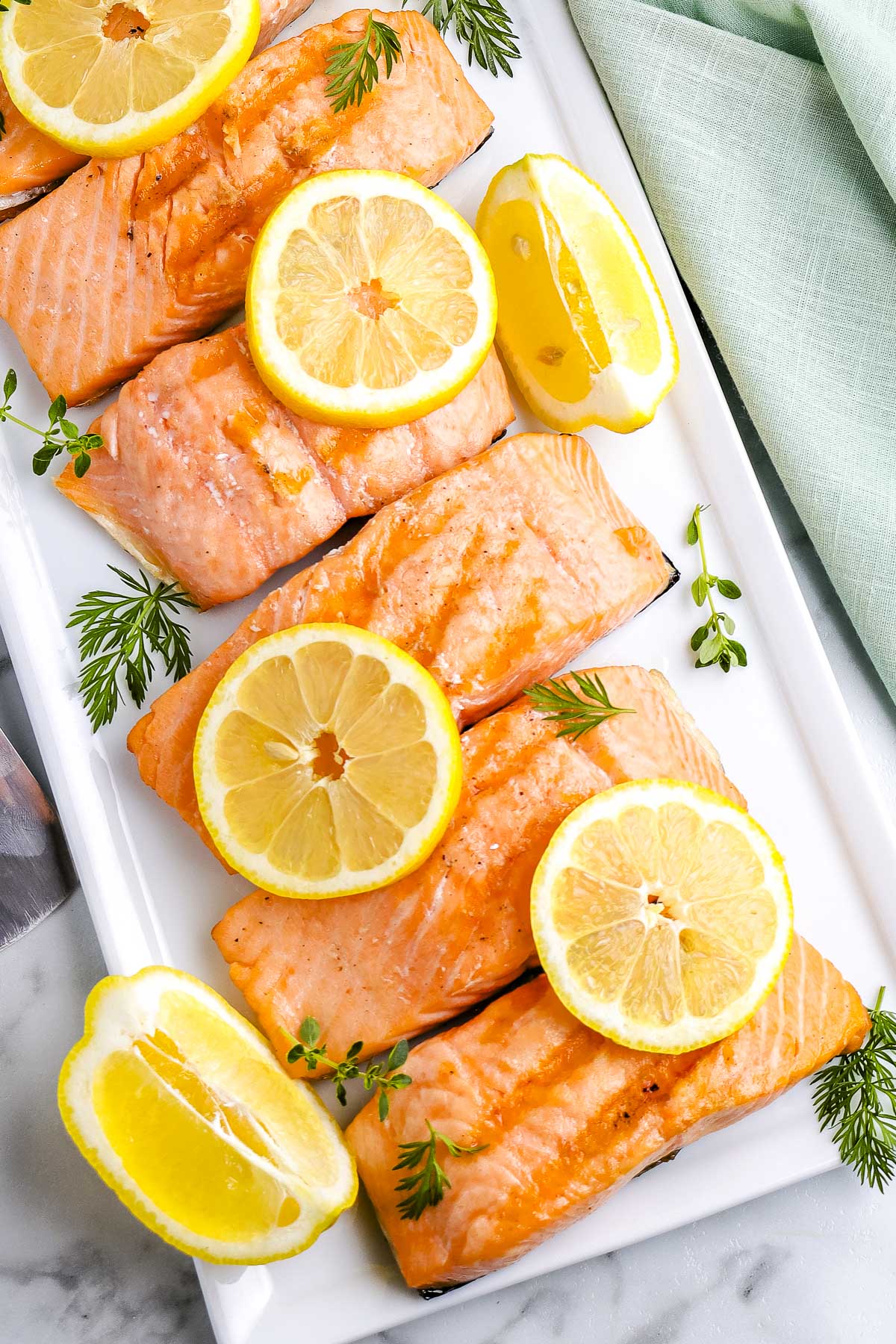
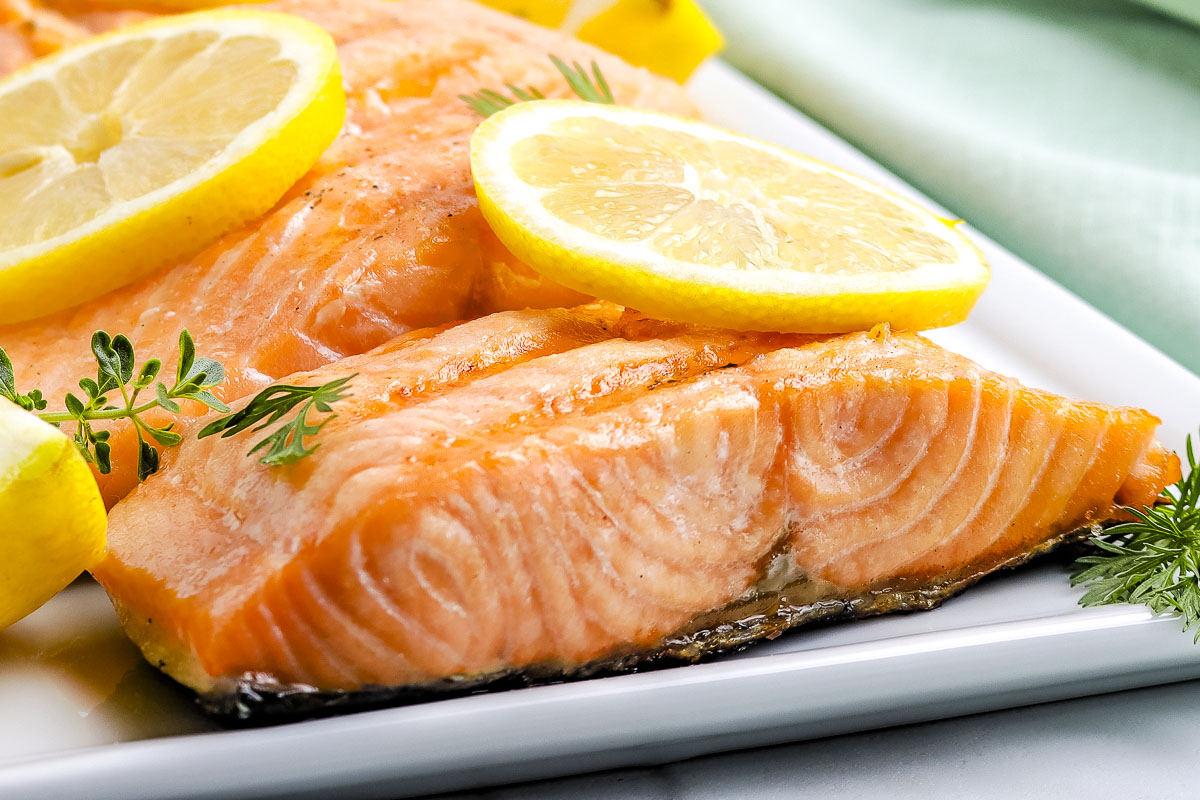
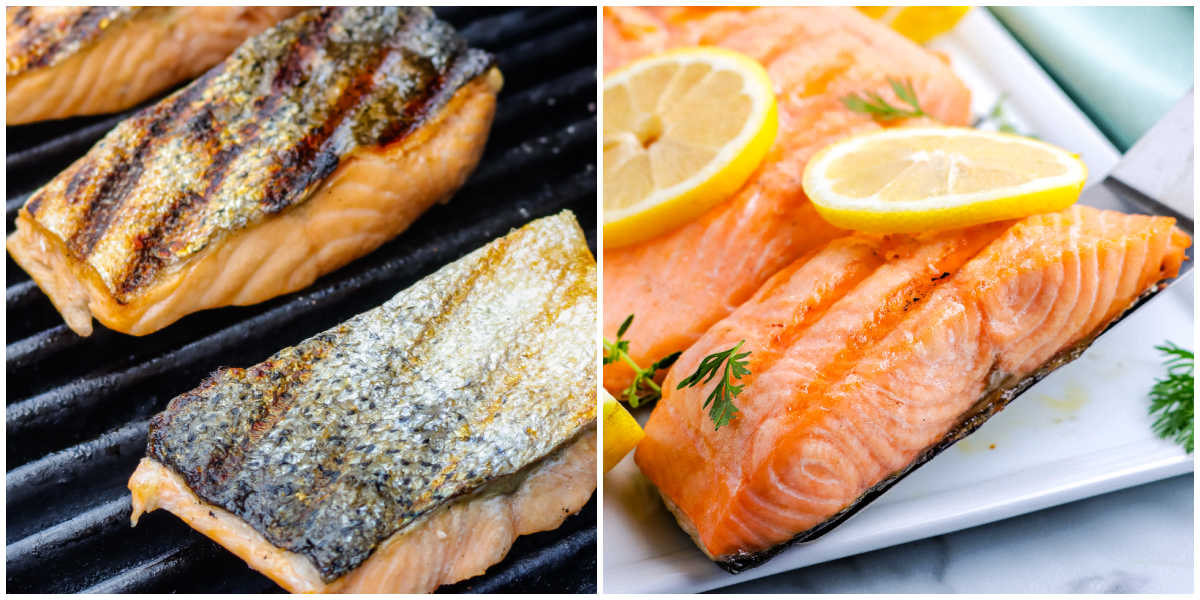
Grilling salmon gives it a wonderful flavor and texture. We cook the filets directly on the grill grates to give them authentic grilled flavor and grill marks, while keeping them tender and juicy in the middle.
If you are looking for quick and easy fish recipes, this one will not let you down. Try oven-baked salmon for another simple, tasty way to prepare it.
Recipe Tip
You’ll get perfectly grilled salmon with this recipe and these simple tips.
- Buy thicker salmon fillets. These will grill better than thin tail pieces.
- Let the brine cool completely before adding the salmon. If the water is too warm, it can start cooking the salmon before it is on the grill.
- Brine the salmon for at least 1 hour. This will help keep the salmon from drying out on the grill.
Grilled Salmon Ingredients
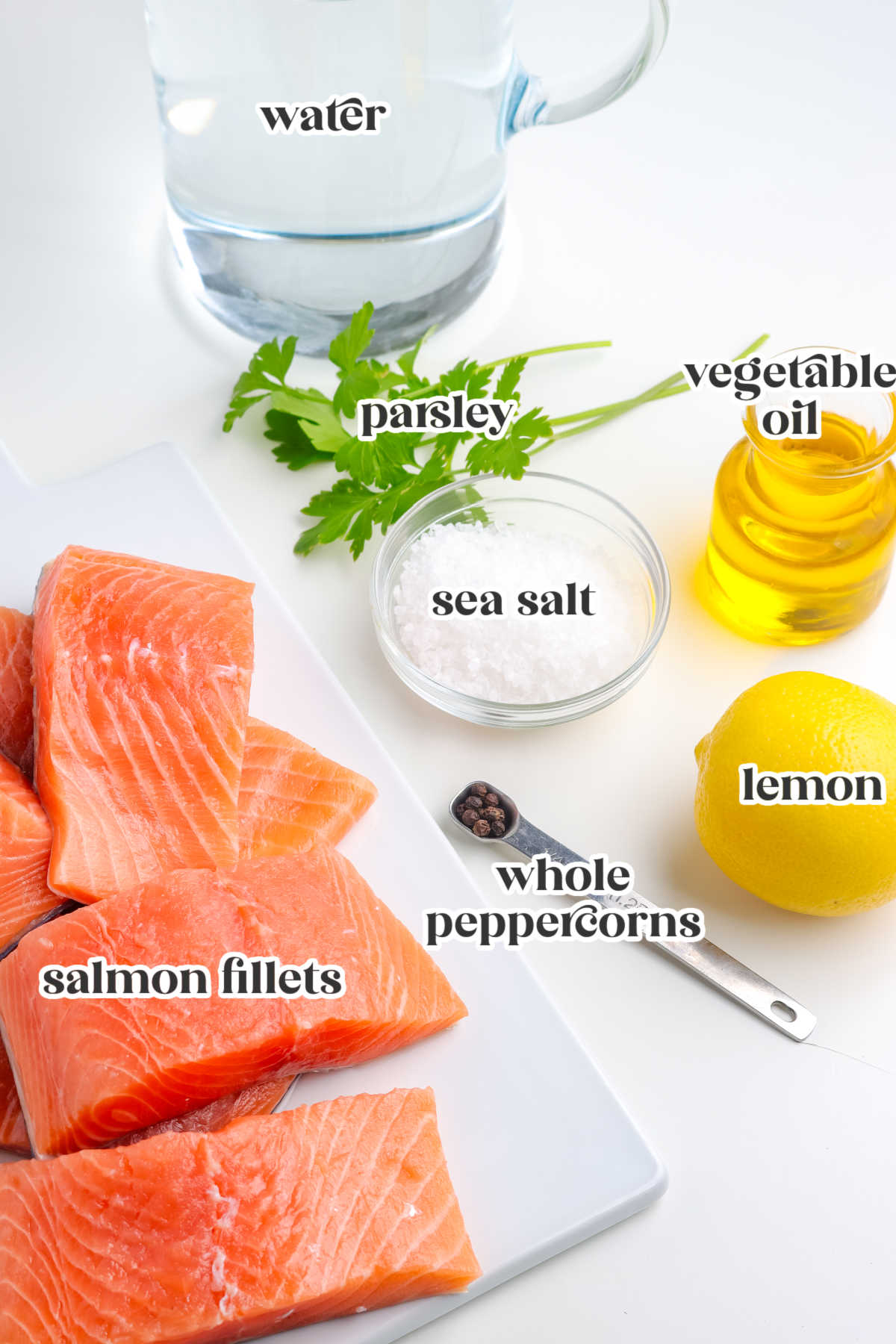
- Sea salt is the foundation of the brine. It seasons the fish throughout and helps the salmon retain moisture during cooking. Kosher salt can be substituted if needed, though you may need to adjust the amount slightly.
- Water creates the base of the brine. Dividing the water allows the salt to dissolve quickly in the heated portion, then cool more quickly once combined with the remaining water.
- Lemon adds a bright citrus flavor that beautifully complements the richness of salmon. Lime slices can be used for a slightly different flavor profile.
- Whole peppercorns bring subtle warmth to the brine without overpowering the fish. Cracked black pepper may be substituted in a pinch.
- Fresh parsley adds fresh herbal notes. Fresh dill, thyme, or rosemary can be used for a different flavor variation.
- Salmon fillets are the star of the recipe. Wild-caught salmon offers a rich flavor, while farm-raised salmon tends to be slightly milder and more buttery. Both work well.
- Salt and pepper season the exterior before grilling and add another layer of flavor.
- Lemon wedges add a fresh burst of citrus right before serving.
- Fresh herbs such as parsley or dill create a beautiful presentation and add fresh flavor.
- Vegetable oil helps prevent sticking and makes it easier to remove the salmon from the grill.
How To Make Grilled Salmon
- To start the salmon brine, bring the sea salt and 1 quart of water to a boil in a medium saucepan. Remove the pan from the heat once it starts boiling.
- Add the remaining water, lemon, peppercorns, and parsley to a brining container or a resealable bag.
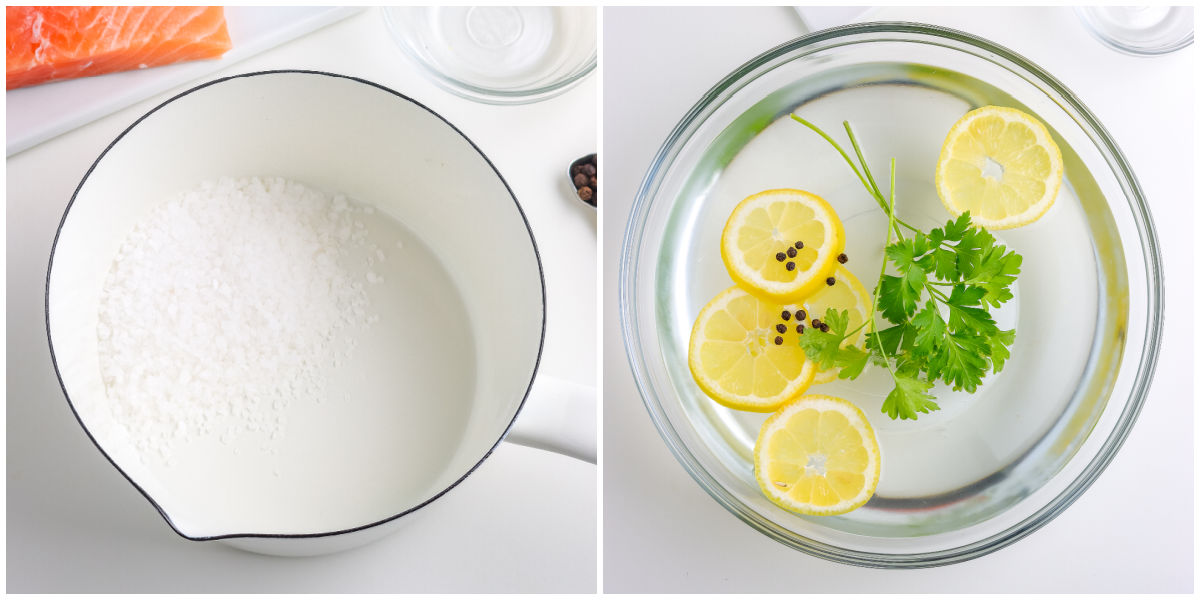
- Pour the hot salt water into the brining container and allow it to cool to room temperature.
- When the brine has cooled, add the salmon and refrigerate for 1 to 2 hours.
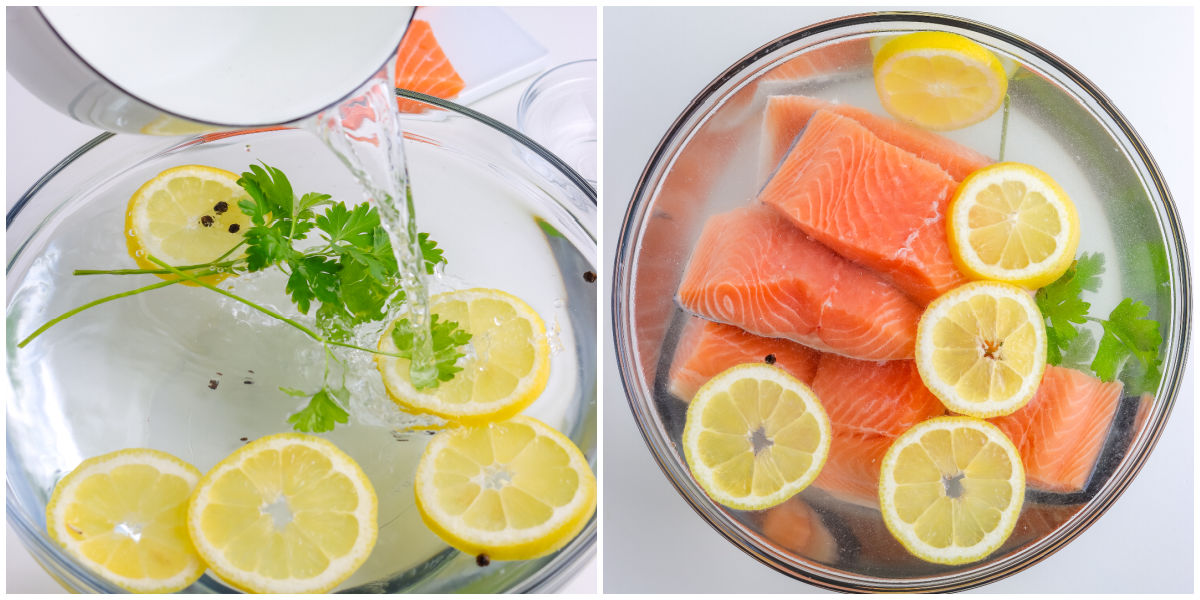
- After that, remove the salmon from the refrigerator and pat it dry with paper towels.
- Get your grill ready by oiling the grates. Then preheat it to about 450 degrees F. If the salmon filets have skin, place them skin side down on the grill. If they do not, place them presentation side down.
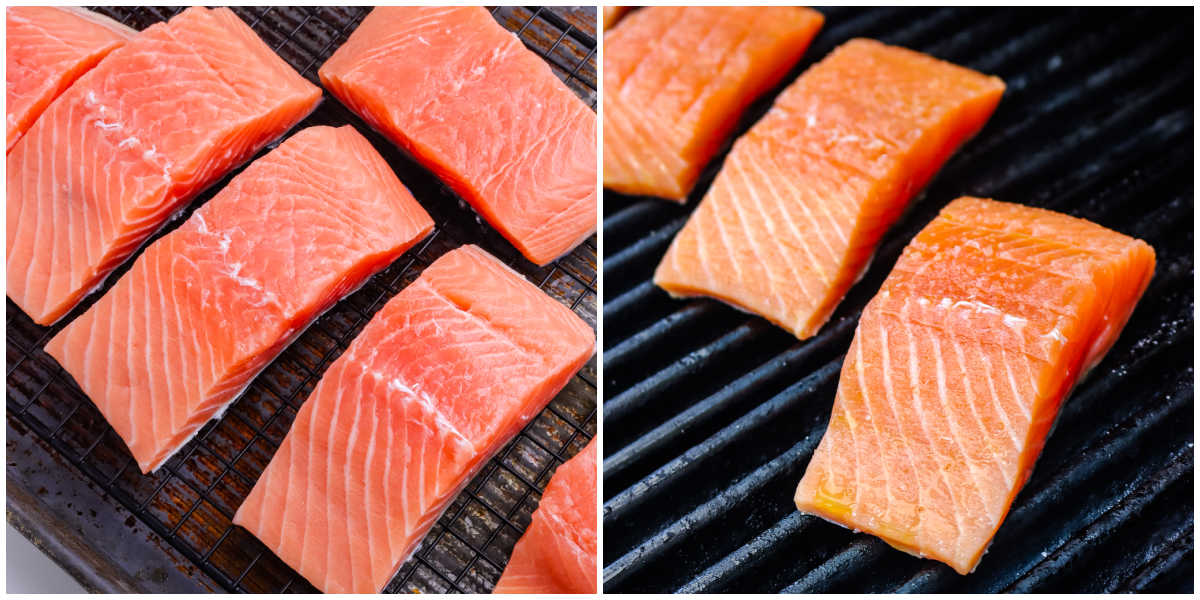
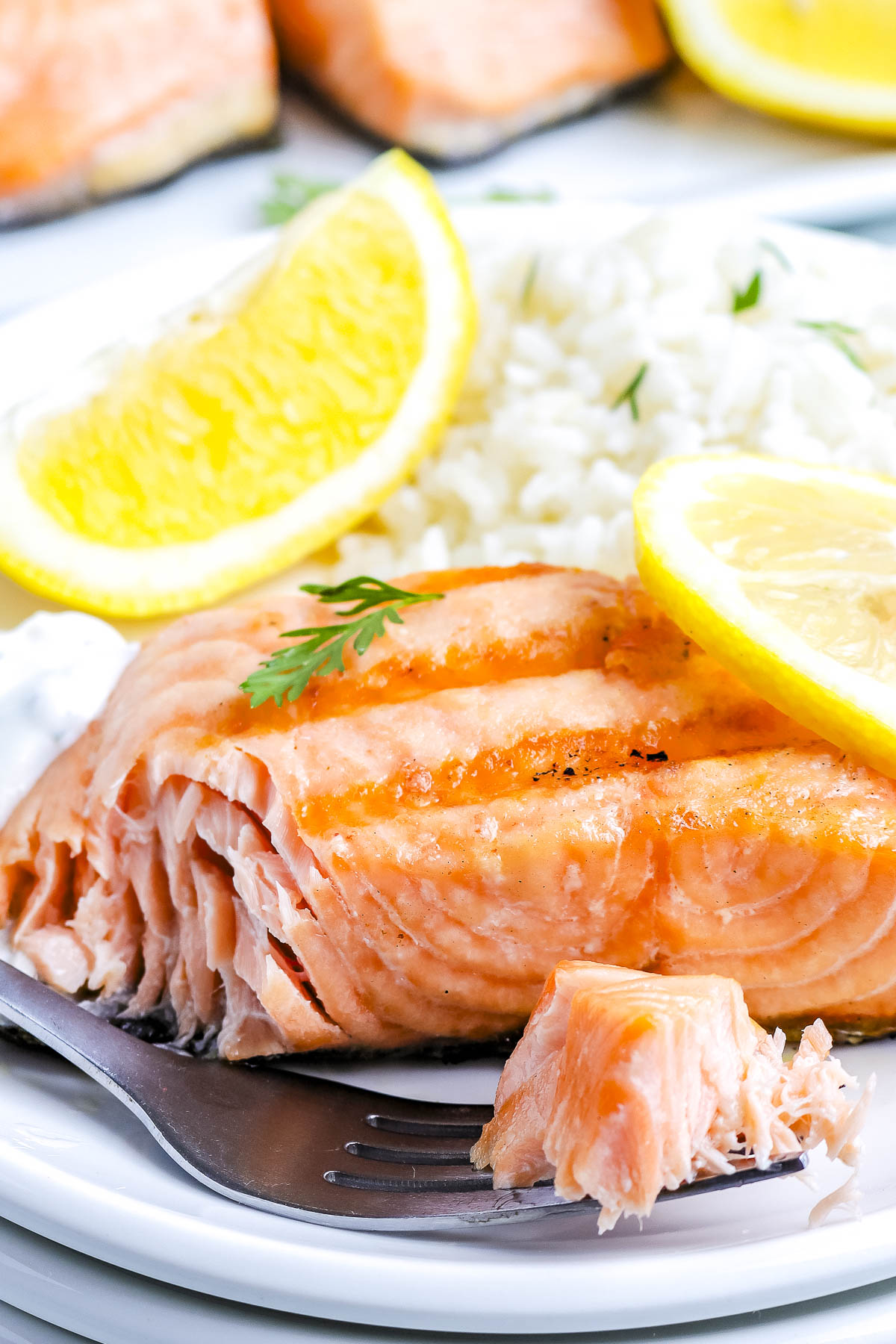
- Grill each side for 4 to 5 minutes, depending on the thickness of the salmon. When the filets are ready, they will become opaque and flake with a fork.
- Once they are cooked to your desired doneness, remove them from the grill and let them rest for a few minutes before serving.
Recipe FAQs
Yes, but make sure it is fully thawed before placing it in the brine.
I prefer to leave the skin on as it creates a barrier on the grill, protecting the fish from the direct heat, making it easier to grill.
The fish should flake easily, be moist in the center, and look opaque. Use a meat thermometer to check the internal temperature. It should be at 145°F.
Some of my favorites include this Copycat Outback Bread, this Cheesy Broccoli Cauliflower Casserole, these Yukon Gold Mashed Potatoes, and this Rotini Pasta Salad.
If letting it sit at room temperature, it takes about 10 to 15 minutes. To speed up the process by a few minutes, place it in the refrigerator.
The key is to oil the grates, then preheat the grill. Adding the salmon filets once they are nice and hot will prevent them from sticking. Do not put salmon on the grill when it is cold.
Brines are great for infusing flavor. It penetrates the fish, giving you flavor throughout. Adding salt and pepper before grilling gives it a little more flavor on the outside.
Grilling Salmon at Higher Altitudes
Grilling temperatures remain fairly consistent at altitude, though there are a few adjustments that can help:
- Keep the grill fully preheated before adding the salmon.
- Fish may cook slightly faster due to lower humidity.
- Use an instant-read thermometer for the most accurate results.
- Watch for visual cues such as opaque flesh and easy flaking.
Easy Grilled Salmon
Equipment
- Small saucepan
- Large container or resealable bag
- measuring cups and spoons
- Knife
- Cutting board
- Grill
- Grill tongs or spatula
- instant-read thermometer
Ingredients
Brine
- ¼ cup sea salt
- 4 quarts water, divided
- 1 lemon, sliced
- ¼ teaspoon whole peppercorns
- 3 sprigs fresh parsley
Salmon
- 6 salmon fillets, about 6 ounces each
- Salt and pepper to taste
- Lemon wedges, for serving if desired
- Fresh herbs, for garnish if desired
- vegetable oil, for oiling grates
Instructions
Make the Brine
- In a small saucepan, combine the sea salt with 1 quart of water. Bring to a boil and stir until the salt dissolves. Remove from heat.
- In a large container or resealable bag, add the remaining 3 quarts of water, sliced lemon, peppercorns, and parsley.
- Pour the hot salt water into the container and let the mixture cool to room temperature. You can refrigerate it to speed this up.
Brine the Salmon
- Once cooled, add the salmon to the brine. Refrigerate for 1 to 2 hours.
- Remove the salmon from the brine and pat dry with paper towels.
Grill the Salmon
- Preheat the grill to 450°F and oil the grates.
- Place the salmon on the grill skin side down. If the fillets are skinless, place them presentation-side down first.
- Grill for 4 to 5 minutes per side, depending on thickness. The salmon should turn opaque and flake easily with a fork. 120 to 125°F for medium rare, and 145°F for well done.
- Remove from the grill and let rest for a few minutes.
Serve
- Serve with lemon wedges and garnish with fresh herbs if desired.
Notes
Storage Instructions
Refrigerator
Freezing
Thawing
Reheating
Make Ahead Tips
Nutrition
Nutrition information is automatically calculated, so should only be used as an approximation.